
How Arbitrage Betting Works in New Zealand and Why One Operator Holds the Whole Market
 Available in US
30 October 2026 · Licence status cross-checked against the Racing Industry Act 2020 (section 74AAA, in force since 28 June 2025) and the Department of Internal Affairs register
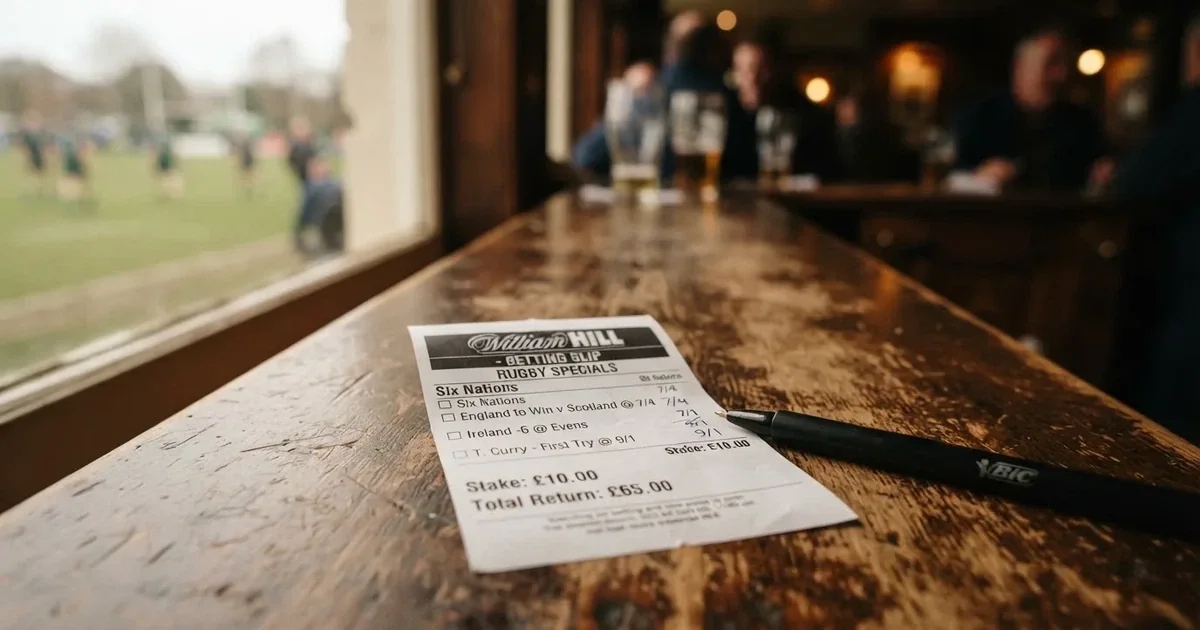
Arbitrage betting is the practice of placing one wager on every possible outcome of a single event at different bookmakers, profiting if the combined odds cover the result. The math is tidy. The reality in New Zealand is messier: section 74AAA of the Racing Industry Act 2020, in force since 28 June 2025, makes TAB NZ (and its online sister brand Betcha) the only operators lawfully entitled to take racing and sports bets from people in New Zealand. A technique that by definition needs several bookmakers cannot be run inside the law’s own perimeter. This page walks through what arbitrage is, why the legal frame collapses it, and how the operators New Zealand players actually meet rank against the criteria arbitrage demands.
- The Ten Platforms New Zealand Punters Meet
- What Arbitrage Betting Actually Is
- Legality and the New Zealand Frame
- Responsible Gambling Inside the Law
- Crypto, Anonymity, and the Offshore Set
- Predictions, Tips, and the Limits of Arbitrage as a Strategy
- Bet Types, Odds, and the Mechanics of Arbitrage
- Ranking the Platforms Against Arbitrage’s Own Demands
- Closing the Loop: Consequences for the Punter
- Frequently Asked Questions
The Ten Platforms New Zealand Punters Meet
The table below sets the scene rather than crowns a winner. TAB and Betcha are the two online brands of TAB NZ. The remaining eight are listed because New Zealand players encounter them, not because any of them holds a New Zealand licence. Every offshore name sits outside the Racing Industry Act 2020’s permission to take bets here, with the consumer safeguards that follow from it.

| Platform | New Zealand status | Position on multi-bookmaker betting |
|---|---|---|
| TAB | TAB NZ brand (sole lawful operator under section 74AAA) | Single operator — no peer to arbitrage against inside the law |
| Betcha | TAB NZ brand (sole lawful operator under section 74AAA) | Single operator — no peer to arbitrage against inside the law |
| Glorion | Not licensed in New Zealand | Terms permit multi-account wagering; no local protection framework |
| BillyBets | Not licensed in New Zealand | Decimal, American and Fractional odds available; bonus rules apply per brand |
| Roobet | Not licensed in New Zealand | Curaçao licence only; no right to take bets from people in New Zealand |
| 22Bet | Not licensed in New Zealand | Curaçao licence only; single bets, accumulators, systems and chains listed |
| Rabona | Not licensed in New Zealand | Curaçao licence only; no local complaints route |
| Golden Panda | Not licensed in New Zealand | Sports terms cover Combo Bets and Bet Builder; no NZ licence |
| BetNinja | Not licensed in New Zealand | Comoros licence; no right to take bets from people in New Zealand |
| FunBet | Not licensed in New Zealand | 24/7 sportsbook across eight codes; no NZ licence |
TAB: The Sole Lawful Operator
TAB is the retail and online face of TAB NZ, the monopoly provider the Racing Industry Act 2020 sets up. Its published betting app first appeared on the New Zealand App Store on 8 September 2014 under the seller name New Zealand Racing Board. Entain runs the TAB business under a 25-year agreement signed in 2023 that gives Entain a 50/50 share of gross profits, with at least $150m a year going to TAB NZ for the first five years; Entain also pledged a one-off $100m payment to the racing sector. The safer-gambling tools inside the app — deposit limits, time-outs and self-exclusion — sit alongside the free Gambling Helpline (0800 654 655) and its text line (8006). Self-exclusion applies across both TAB NZ brands.
TAB does not lend itself to arbitrage. There is no second lawful bookmaker to lay the other side with, and any pairing involves an offshore brand the Act specifically forbids. The platform is the right choice for a New Zealand punter who wants regulator oversight, a harm-minimisation framework, and a complaints route; it is the wrong tool for anyone whose strategy assumes the technique can be run lawfully here.

Betcha: The Online Sister Brand
Betcha is the second TAB NZ online brand, distinguished by features TAB proper does not foreground. Its daily Toolbox runs odds boosts and insurance tools for bets that miss. The Bet Social section lets punters chat, follow tipsters, and share bets or pools. The Playbook carries tips and match analysis. Same operator as TAB — same lawful status, same exclusion framework, same profit-share deal with Entain.
From an arbitrage angle Betcha is interesting but not liberating: pairing a Betcha bet with a TAB bet is a single-company wager with two apps, not two bookmakers. The odds that diverge are the odds inside one operator’s product, not odds between independent firms with separate liability. Betcha’s features serve a punter who wants social interaction and boosted odds on the lawful side of the fence.
Glorion
Glorion is an offshore brand without a New Zealand licence. Support runs through Live Chat and email; the site restricts customers to those over 18. New Zealand players who land here do so outside the local framework: no Department of Internal Affairs oversight, no access to the Gambling Helpline through the platform’s own tools, and no local complaints route. The brand’s terms do not, on the surface, forbid opening more than one account, but the consumer side of that arrangement sits in Curaçao rather than Wellington.
For a New Zealand punter, Glorion is one of the offshore names that appear in search results and affiliate pages. Its appeal is the broader market and the multi-bookmaker set arbitrage demands; its cost is the absence of the safeguards the Racing Industry Act 2020 attaches to TAB NZ.
BillyBets
BillyBets offers punters three odds formats: Decimal (2.00), American (+100) and Fractional (1/1). Cashback and reload bonuses run on sports, and a coin shop converts coins earned through deposits, betting, tournaments and challenges into free bets and free spins. The VIP programme has five tiers. None of this brings BillyBets within the New Zealand law’s permission: only TAB NZ holds that, and BillyBets names no licence that applies here.
The platform is a generic offshore sportsbook that New Zealand players meet through standard channels. The multi-format odds display and the bonus structure are features a casual punter might notice first; the legal status and the lack of a local complaints channel are the ones that matter when something goes wrong.
Roobet
Roobet is the brand name of Raw Entertainment B.V., registered in Curaçao under number 157205 and licensed there under OGL/2024/687/0427. The Curaçao licence gives the company no right to take wagers from people in New Zealand. The brand positions itself around crypto and casino alongside sports, and its sportsbook sits inside that broader product. The same absence-of-local-framework caveat applies as for the other offshore names.
22Bet
22Bet takes single bets, accumulators, systems and chains, and offers live betting with real-time odds and score updates. The Curaçao licence (8048/JAZ) belongs to TechSolutions Group N.V., a holder that has no New Zealand footprint. From an arbitrage perspective, 22Bet is one of the offshore books a New Zealand-based strategy relies on, were such a strategy lawful to run. It is not.
Rabona
Rabona launched on 23 December 2019 as the sixth online sportsbook of the Soft2Bet group. Its Curaçao licence extends its offering across European and Latin American markets but reaches New Zealand only as an unauthorised extension. The brand’s product range is the typical offshore spread — pre-match, live, casino — without the local permission or the harm-minimisation scaffolding TAB NZ carries.
Golden Panda
Golden Panda publishes dedicated Sports Terms and Conditions covering fixed-odds betting, including Combo Bets, the Bet Builder feature, live scoreboards and broadcasts, and stake and odds limits. The brand names no licence that applies in New Zealand. As with the other offshore names, what it offers punters sits outside the Racing Industry Act 2020’s perimeter.
BetNinja
BetNinja states that it conducts online gaming operations under a licence from the Union of the Comoros. The Comoros licence gives the brand no right to take bets from people in New Zealand. The product mix is the usual offshore spread, and the local-framework gap is the same as every other name on this list outside TAB NZ’s two brands.
FunBet
FunBet’s sportsbook offers odds on football, ice hockey, American football, basketball, volleyball, tennis, rugby and baseball, with live betting and a bookmaker described as open 24/7. No licence applies in New Zealand. The breadth of sports and the round-the-clock framing are pitched at a global audience; the New Zealand reader sits outside the law’s protection when using it.
What Arbitrage Betting Actually Is
Arbitrage betting — sometimes called “arbs” — is the exploitation of price disagreement between bookmakers on the same event. Two firms price the same match differently because their traders hold different views or because one of them made an error. If the prices diverge enough that the implied probabilities of all outcomes add up to less than 1, a bettor who stakes proportionally on each outcome locks in a return that exceeds the total stake, no matter which result occurs.
A worked example: a tennis match with two outcomes. Bookmaker A prices Player 1 at 1.90 and Player 2 at 2.20. Bookmaker B prices Player 1 at 2.10 and Player 2 at 1.95. The implied probabilities of all outcomes across both books overlap in a way that, with the right stake split, returns more than the stake whichever player wins. The return on a winning bet is stake × odds; the net profit on a winning leg is stake × (odds − 1). For a multi-leg combination the odds of the legs multiply into one price.
The key phrase from the underlying math: an arbitrage opportunity exists when the odds cover all mutually exclusive outcomes of an event and their implied probabilities add up to less than 1. This is the definition that holds the entire technique together. The inverse — implied probabilities summing to more than 1 — is the bookmaker’s margin: the cut the firm keeps on every unit wagered.
The Margin That Lives Inside Every Price
The margin is what the bookmaker keeps of every unit bet on a market, and it surfaces as the sum of the implied probabilities exceeding 1. A two-way market with decimal odds 1.90 / 1.90 is a clean example: the implied probability of each outcome is 1 ÷ 1.90 ≈ 0.5263, so the two sum to about 1.0526, leaving the bookmaker a margin of roughly 5.26 %. State the result as a band rather than a single figure: depending on rounding, the margin on this illustrative market sits in the 5 % to 5.5 % region. This is the cut the firm keeps before any payout is made.
The same calculation explains why arbitrage opportunities are rare and small. With most two-way markets sitting at margins in the 2 % to 8 % range, an arbitrage opportunity requires the cross-book sum of implied probabilities to fall below 1 — a narrow window that closes the moment one of the bookmakers adjusts its price. A 2012 study by Franck, Verbeek and Nuesch found that 98 % of arbitrage opportunities return less than 1.2 %, so arbitrage bets involve relatively large sums of money to produce a meaningful profit. That is the trade at the heart of the technique: thin edge, large stake.
Why Bookmakers Push Back
Bookmakers usually detect arbitrage betting quickly and view it unfavourably. Maximum wager limits on such accounts often drop sharply, and in the past half of an arbitrage bet was cancelled or the account closed outright. The reason is structural: a bettor who only ever places wagers when prices are mispriced is a customer the firm’s margin is built to exclude. The bookmaker’s margin sits inside every line it posts, and an arbitrage bettor is, by definition, siphoning that margin off.
For a New Zealand punter the detection-and-retaliation pattern runs in addition to the legal frame. An offshore bookmaker may limit or close the account; an onshore operator — TAB NZ — has no peer to arbitrage with in the first place.
Legality and the New Zealand Frame
The Racing Industry Act 2020 establishes TAB NZ as the sole betting provider for racing and sports in New Zealand. The Racing Industry Amendment Act 2025 inserted section 74AAA: no person other than TAB NZ may offer racing betting, sports betting, or other racing or sports betting to a person in New Zealand, regardless of where that person is resident or incorporated. The change took effect on 28 June 2025. The Department of Internal Affairs told unlicensed providers serving New Zealand to withdraw with immediate effect.
The Online Casino Gambling Act 2026 licenses online casino gambling only and does not extend the betting monopoly. TAB New Zealand winning the right to apply for a casino licence does not let it or anyone else widen the betting side. Greyhound racing is closing in stages from 1 August 2026, and from that date offshore operators may not take bets on greyhound races either.
What may be bet on: racing and sports betting from TAB NZ only. TAB NZ takes fixed-odds and tote (pool) bets; its published betting rules define bets such as Win, Place, Each Way, Quinella, Exacta, Trifecta, First Four, Double, Treble, Daily Double, Running Double, Quaddie and Big6, plus Multis and Same Game Multis (a multi whose legs come from one event). Live betting is listed in the TAB NZ apps. The ban covers events held inside and outside New Zealand. No statutory per-bet cap exists; limits are TAB NZ’s own terms. No lawful New Zealand betting exchange operates, and spread betting sits outside TAB NZ’s sports-betting definition.
The player side: section 19(4) of the Gambling Act 2003, inserted in 2025, says an individual may not be convicted for placing a bet with an offshore betting operator in breach of section 74AAA. No source states a penalty for a player. The operator side is different: since 28 June 2025 an overseas bookmaker taking sports or racing bets from a person in New Zealand is breaking New Zealand law. The penalty for breaching section 74AAA is not stated in the section, and no prosecution of an offshore bookmaker was found. New Zealand does not geo-block bookmaker sites; it puts liability on the offshore operator.
The honest framing: TAB NZ and Betcha are the only lawful options, with New Zealand harm-minimisation tools, regulator oversight, and a complaints framework; offshore operators are unlawful to serve New Zealand, carry no New Zealand complaints route, and fall under the Department of Internal Affairs’ stated risks, including the possibility of limits, withheld credits, and unpaid large wins. Neither group is “the safe choice” by default — the comparison runs along different axes.
What That Means for an Arbitrage Strategy
A technique that needs several bookmakers cannot be run with lawful New Zealand providers alone. The TAB NZ brands are one operator group, not rivals: pairing a TAB bet with a Betcha bet is a single-firm wager with two apps, not two independent liability-taking books. To run arbitrage a New Zealand punter relies on at least two of the offshore names on this page’s list, which means relying on operators that are unlawful to serve New Zealand and that carry no local complaints route.
The arithmetic does not change. The legal frame does. Section 74AAA does not require a geo-block on bookmaker sites, but it places liability on the offshore operator and puts the punter outside the local harm-minimisation framework. The Department of Internal Affairs warns that overseas operators may be in jurisdictions with minimal consumer safeguards, may not return unspent credits, and may not pay out large wins. These are the conditions arbitrage punters in New Zealand operate under by default.
Responsible Gambling Inside the Law
The age for TAB NZ betting is 18 (betting under 18 is an offence under section 89 of the Racing Industry Act 2020). Land-based casinos are 20; the two thresholds never merge. TAB NZ accounts need a verified New Zealand address and ID.
TAB NZ lists deposit limits, time-outs, and self-exclusion in its apps, and an exclusion covers both TAB NZ brands. The Department of Internal Affairs oversees compliance under the Gambling Act 2003. TAB NZ pays a Problem Gambling Levy of 0.74 % in force from 1 July 2025 to 30 June 2028.
Help: the free Gambling Helpline (0800 654 655) and the text line (8006) are publicly listed through TAB NZ’s app and Safer Gambling Aotearoa. There is no single national online-betting exclusion register; the register the 2026 online casino law will require is for online casinos only, and it does not extend to sports or racing.
The offshore names on the list above carry none of these tools by default. Some run their own self-exclusion systems; none of them reach into the New Zealand harm-minimisation framework. A punter using an offshore operator is, for harm-minim purposes, on their own.
Crypto, Anonymity, and the Offshore Set
The New Zealand frame says nothing about crypto or VPN use in the betting context. Account opening at TAB NZ requires a verified New Zealand address and ID, which forecloses the anonymous route through the lawful operator. Offshore brands — Roobet positions itself around crypto and casino, and several of the others accept crypto deposits — sit on the other side of that wall.
The arbitrage angle is straightforward: crypto-friendly books are an obvious peer group for a multi-bookmaker strategy, and the absence of a New Zealand ban on crypto payments at the player level means the funds can move. The legal frame still places liability on the offshore operator for serving New Zealand customers; the player is not convicted under section 19(4) of the Gambling Act 2003. The harm-minimisation gap remains. Payouts, complaint handling, and dispute resolution all run through the offshore operator’s own jurisdiction.
Predictions, Tips, and the Limits of Arbitrage as a Strategy
Arbitrage betting is a structural technique, not a predictive one. The arbitrageur does not forecast the result; the arbitrageur structures stakes so that no result loses money. The forecast lives inside the prices the bookmakers publish. When the prices disagree by enough, the arbitrageur steps in.
That structural quality is what makes “tips” and “predictions” irrelevant to the arbitrageur. A tipster who predicts the winner is doing a different job. An arbitrageur’s edge is the mispricing across books, which can come from differing trader opinion or from outright errors. Tips and predictions live on the same page because both populate the search-results cluster, but the techniques do not share a method.
The bankroll question matters more. The profitability of the technique is low, requiring large sums to make an impact. The bankroll needed to make arbitrage worthwhile runs into five figures at minimum, and the bookmaker-retaliation pattern means the same bankroll is at risk of being restricted across multiple platforms simultaneously. The expected cost of running the strategy is the sum of: the detection risk, the account closures, the limit reductions, the half-bet cancellations, and the withdrawal friction at the offshore end.
A bettor who treats arbitrage as a get-rich-quick method has misread the technique. A bettor who treats it as a part-time discipline with a dedicated bankroll and an exit plan has understood it.
Bet Types, Odds, and the Mechanics of Arbitrage
A single bet returns stake × odds if it wins, and the net profit is stake × (odds − 1). A combination bet multiplies the odds of the legs into one price. An arbitrage bet is a specific kind of combination: one wager per outcome of a two-way or three-way market, sized so the combined stake returns more than the total outlay regardless of result.
The stake sizing follows the odds. For a two-way market at 1.90 / 1.95, the implied probabilities are roughly 0.5263 and 0.5128. If the cross-book sum is below 1 — say the other bookmaker offers 2.10 / 1.85 — the proportional stakes produce the arbitrage return. Most offshore books display odds in decimal format by default; TAB NZ uses decimal odds too. BillyBets offers Decimal (2.00), American (+100), and Fractional (1/1) for punters who prefer them. The display format does not change the math; the math runs on the implied probability.
The bookmaker’s margin is the inverse signal: if the cross-book sum of implied probabilities is above 1, the market carries the firm’s cut. A market at 1.90 / 1.90 has a margin of 5.0 %. A market at 2.00 / 2.00 has a margin of 0 % — the bookmaker breaks even and the punter captures the full return. Real markets rarely sit at exactly 0 % margin; sportsbooks vary widely, often 2 % to 8 % on mainstream markets, higher on niche ones. The arbitrage window opens only when cross-book disagreement pushes that sum below 1.
Same Game Multis — a multi whose legs come from one event — are a TAB NZ feature. They do not produce arbitrage by themselves: a single-event multi is a single firm’s price. Multis across events from different books are where the technique lives.
Ranking the Platforms Against Arbitrage’s Own Demands
Arbitrage betting demands, by definition, several independent bookmakers willing to take a bettor’s wagers without limit. The New Zealand frame allows exactly one lawful provider — TAB NZ — and treats offshore alternatives as unlawful for the operator. The ranking below is not a ranking of arbitrage quality; it is a ranking of how each platform sits relative to a technique the law forecloses.
TAB and Betcha occupy the lawful end. Both are the right choice for a New Zealand punter who wants regulator oversight, a complaints route, and harm-minimisation tools. Both are the wrong tool for an arbitrage strategy, because no peer exists inside the law.
The offshore names fill the rest of the list. Each carries the same local-framework gap and the same Department of Internal Affairs’ stated risks. Their differences are product features: 22Bet’s systems and chains, BillyBets’ three-format odds display and coin shop, Rabona’s casino breadth, FunBet’s 24/7 sportsbook across eight codes, Roobet’s crypto-first positioning. None of these differences change the legal frame. None of them extend a New Zealand complaints route to the punter.
For a New Zealand punter, the choice between TAB NZ and an offshore alternative is not a choice between arbitrage-friendly and arbitrage-unfriendly platforms. It is a choice between the only lawful option and several unlawful ones. The arbitrage technique does not run on either side.
Closing the Loop: Consequences for the Punter
The consequences of the New Zealand frame are practical. A punter who wants to bet on racing or sport in New Zealand uses TAB NZ or Betcha, full stop. A punter who wants to run arbitrage as a discipline uses offshore brands, and accepts the operator-side illegality, the absence of local harm-minimisation tools, and the bookmaker retaliation pattern the technique triggers. A punter who wants both — the law and the arbitrage — does not have a third option.
The arithmetic of the technique is independent of the law. Two-way markets at 1.90 / 1.90 carry a margin of 5.0 %; a cross-book sum below 1 produces the arbitrage return; a 2012 study found 98 % of opportunities return less than 1.2 %. These figures describe what arbitrage is, not whether it is available in New Zealand. In New Zealand, the legal frame is the binding one.
Frequently Asked Questions
Does sports arbitrage betting work?
It works as arithmetic: when the cross-book sum of implied probabilities on a market falls below 1, proportional stakes on each outcome return more than the total outlay regardless of which result occurs. The technique produces thin edges — a 2012 study found 98 % of arbitrage opportunities return less than 1.2 % — so it works on large bankrolls, and bookmakers detect and limit arbitrage bettors as a matter of course.
How to arbitrage bet?
Place one wager on every outcome of a single event at different bookmakers, sized so the combined stake returns more than the total outlay no matter which result occurs. The odds must cover all mutually exclusive outcomes with their implied probabilities summing to less than 1. The stake split follows the odds so each leg returns the same total.
How to do arbitrage betting?
Find a market where two firms disagree on price by enough that the implied probabilities of all outcomes sum below 1. Calculate the stake split from the odds. Place the bets before one of the bookmakers adjusts. Repeat — knowing that bookmakers detect the pattern quickly, lower maximum wager limits on flagged accounts, and have historically cancelled half of an arbitrage bet or closed the account outright.
Which bookmaker may lawfully take sports and racing bets in New Zealand?
TAB NZ and its online sister brand Betcha — the two brands of the monopoly provider the Racing Industry Act 2020 establishes. Section 74AAA, inserted by the Racing Industry Amendment Act 2025 and in force since 28 June 2025, makes them the only operators lawfully entitled to take racing and sports bets from people in New Zealand.
How is the return on a bet worked out from the stake and the odds?
For a single bet, the return is stake × odds if the bet wins, and the net profit is stake × (odds − 1). For a combination bet the odds of the legs multiply into one price, and the same formulas apply to that combined price.
What is the bookmaker’s margin and how can it be seen in the odds?
The margin is the cut the bookmaker keeps on every unit wagered. For a two-way market with decimal odds, the implied probability of each outcome is 1 ÷ its odds; the margin is the sum of those implied probabilities minus 1. A market at 1.90 / 1.90 has a margin of 5.0 %.
Written by the editors at Kiwirugbybetting.